Employers
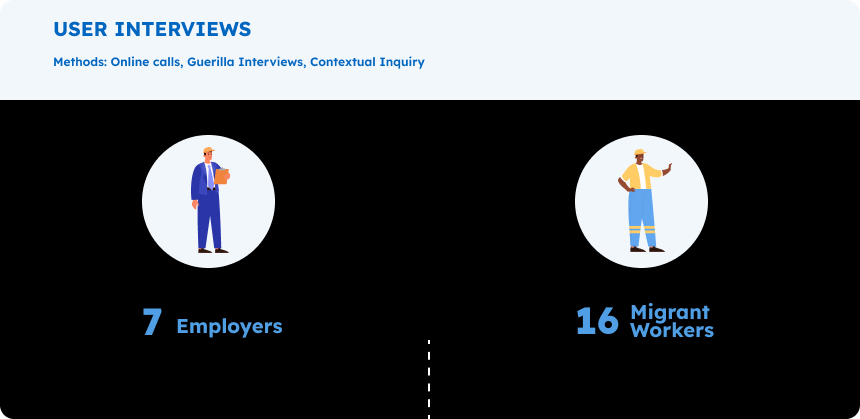
7 employers interviewed
Needed clearer operational visibility, less attendance administration, and a proposition feasible for small SMEs.
03 — SOJOURNER BROTHER · SINGAPORE · APRIL 2022 · 3-WEEK MVP
Role
Research and synthesis lead · Interface co-designer
Context
General Assembly UX Immersive capstone team
Timeline
3 weeks · Apr 8–29 2022
Delivered
Attendance Tracking + Earned Wage Access + SSOT integration
Sojourner Brother is a Singapore social enterprise supporting employers and migrant workers through accessible technology.
Its service premise connected three pillars: Sojo Hire for recruitment, Sojo Manage and Salary for employment administration, and Sojo Health for worker wellbeing.
The capstone team explored a migrant-worker service concept meant for voluntary use within a relationship with unequal power. Employers needed operational visibility; workers needed an understandable record they could rely on.
I led synthesis and co-designed the interfaces. Research, testing, and delivery were collaborative across the capstone team.
Post-handover production use is not independently verified.
WHAT I DID
Co-led interviews with employers and migrant workers, then led synthesis across both groups to identify where their definitions of accountability diverged.
Co-ran desk, market, and landscape research with the team to assess which ideas offered enough user and client value for a three-week MVP.
Led interview coordination and watched for hesitation and reactions during worker usability testing. Those observations guided changes the team designed together.
Co-designed worker mobile, employer mobile, and employer web interfaces for Attendance Tracking and Earned Wage Access.
Used Work Manager for usability testing, then helped scale it down post-UT to focused Attendance Tracking; Salary Tracking was removed from the MVP scope.
Delivered tested Attendance Tracking, Earned Wage Access, and SSOT integration MVP capabilities to the client with the capstone team.
FIELD RESEARCH
Employers
7 employers interviewed
Needed clearer operational visibility, less attendance administration, and a proposition feasible for small SMEs.
Migrant workers
16 migrant workers interviewed
Needed clearer records, understandable actions, and safer access to wages already earned.
Employers described a need for clearer operational visibility and less attendance administration. Migrant workers described a need for clearer records, understandable actions, and safer access to wages already earned.
A shared record that both parties could understand could make accountability more legible across the relationship.
The team used that evidence to test a narrower shared-record direction rather than defend the broad Work Manager concept.
Usability testing involved 4 employers and 5 migrant workers.
The overlap with research participants is unknown.
The records do not establish whether any research participants returned for usability testing. Recruitment channels, interpretation, and language support are also not documented well enough to claim.
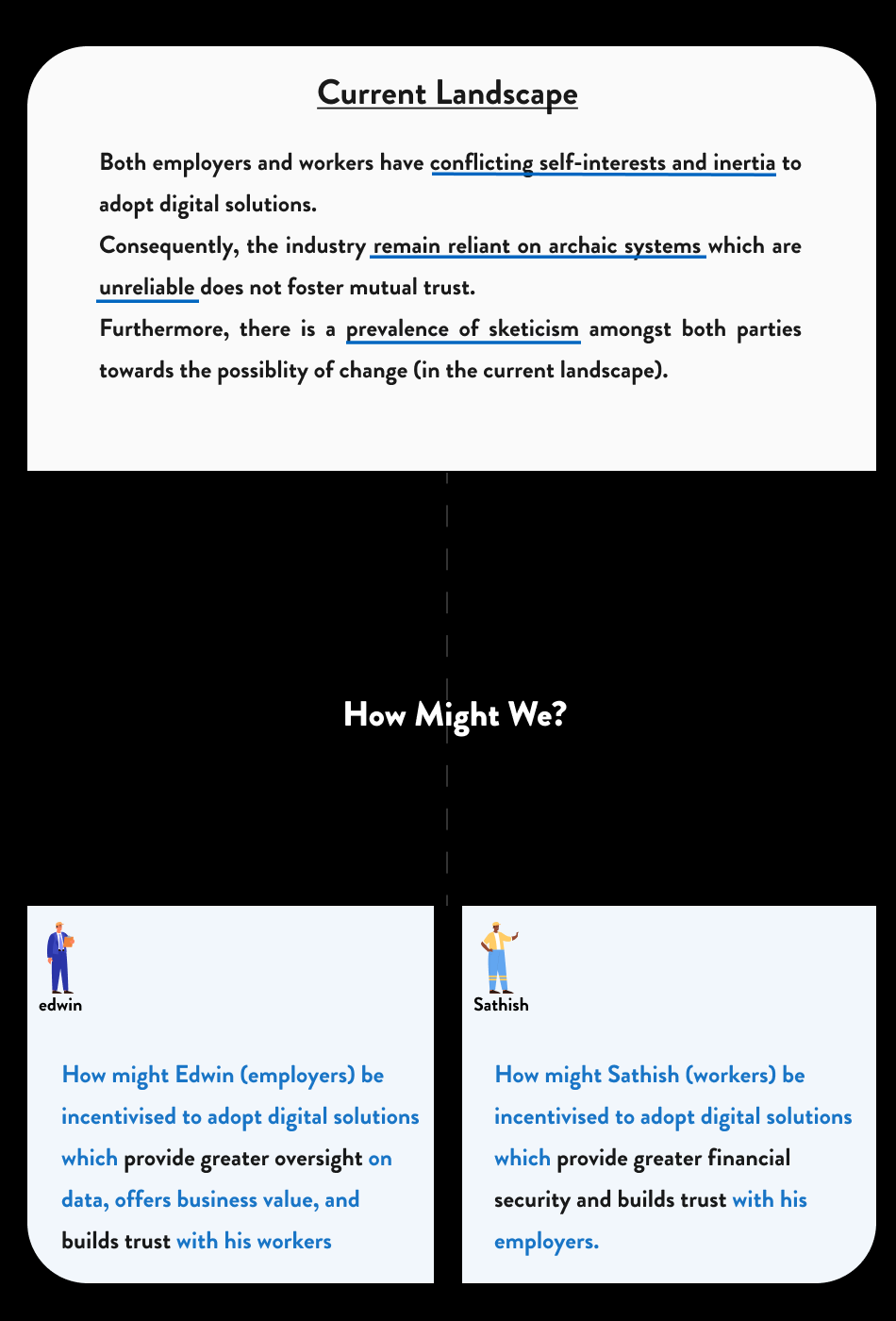
The current landscape and How Might We framing map the service context before concepts were narrowed.
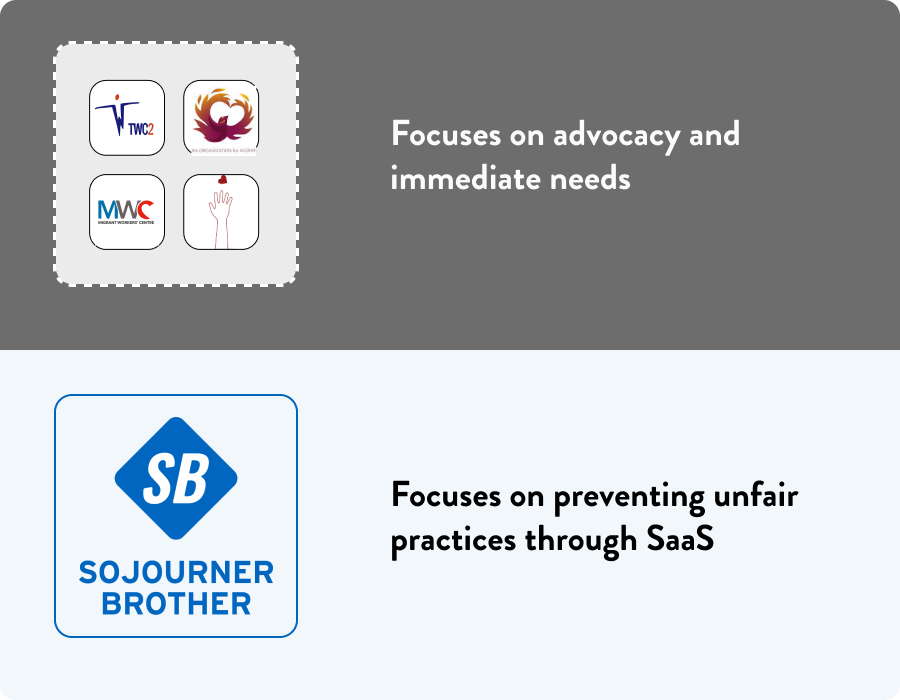
Landscape research compares the existing migrant-worker service ecosystem to identify where a shared record could add value.
Worker interviews surface a need for clear records, understandable actions, and safer access to wages already earned.
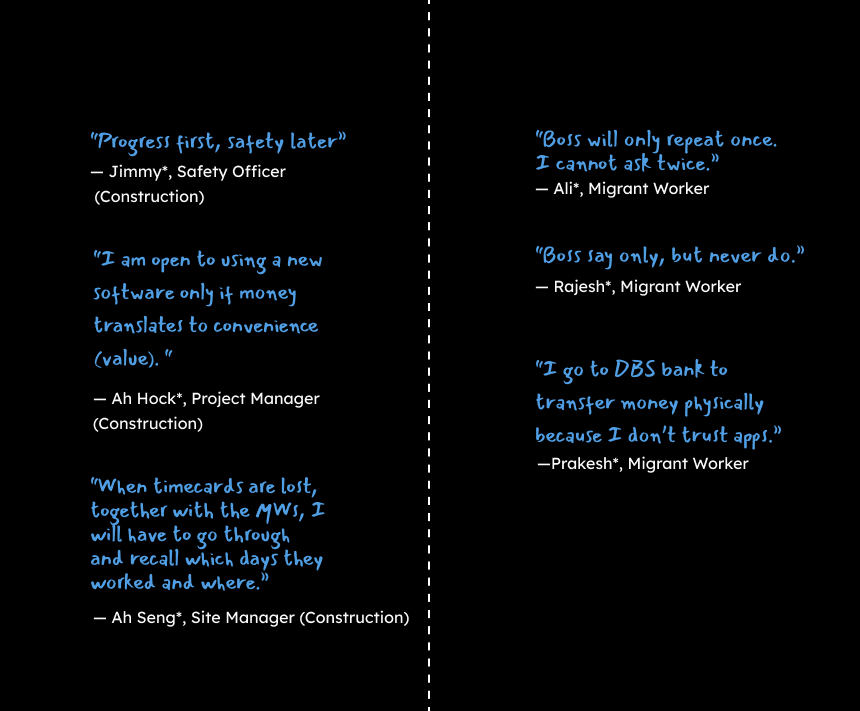
Employer interviews surface a need for operational visibility and less attendance administration.
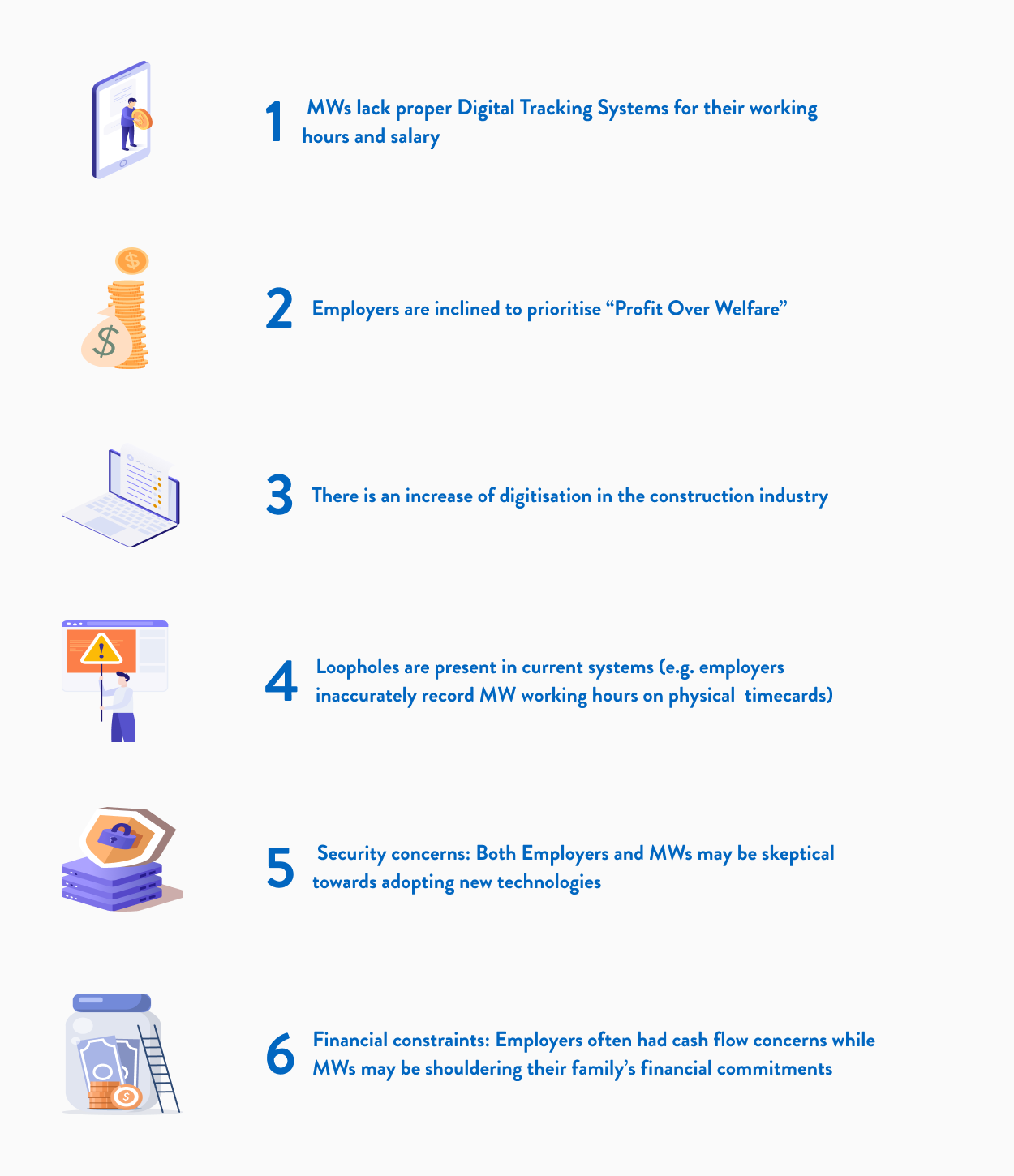
Six themes consolidate the recurring needs and tensions found across employer and migrant-worker research.
SCOPE
Advanced to MVP
Kept access to wages already earned and an employer approval step in the MVP scope.
Scoped out
Removed during client scoping because it did not offer enough MVP value or feasibility.
SCALED DOWN POST-UT
Work Manager was used for usability testing and then scaled down post-UT to focused Attendance Tracking.
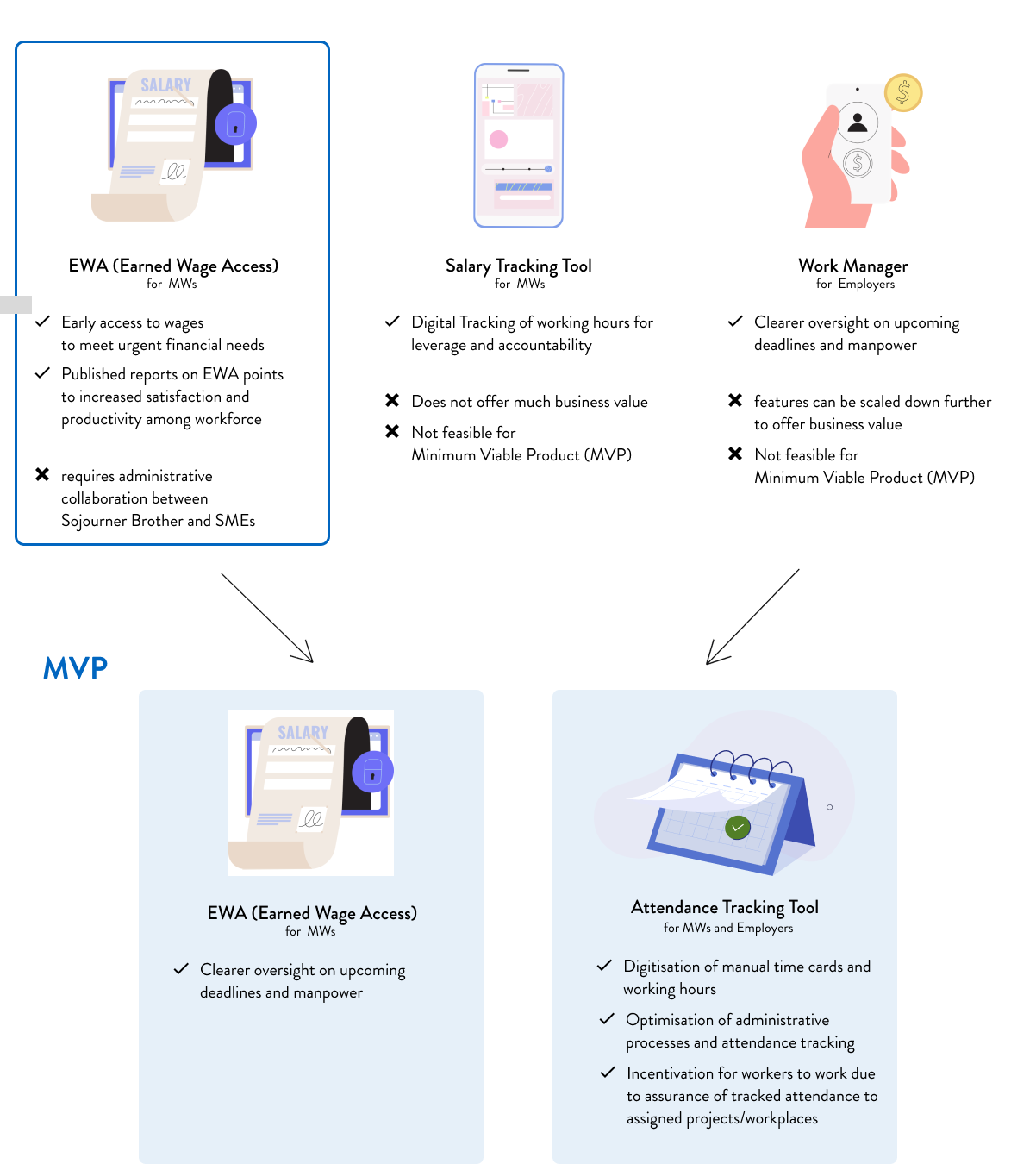
The exploration compares EWA, Salary Tracking, and Work Manager while weighing client value and MVP feasibility.
Historical exploration artifact. Embedded outcome and MVP wording is preserved from the original case-study image. Verified delivery status is the page ledger: Attendance Tracking, Earned Wage Access, and SSOT integration were delivered MVP capabilities; Salary Tracking was scoped out; geo-tagging was proposed; post-handover production use is unverified.
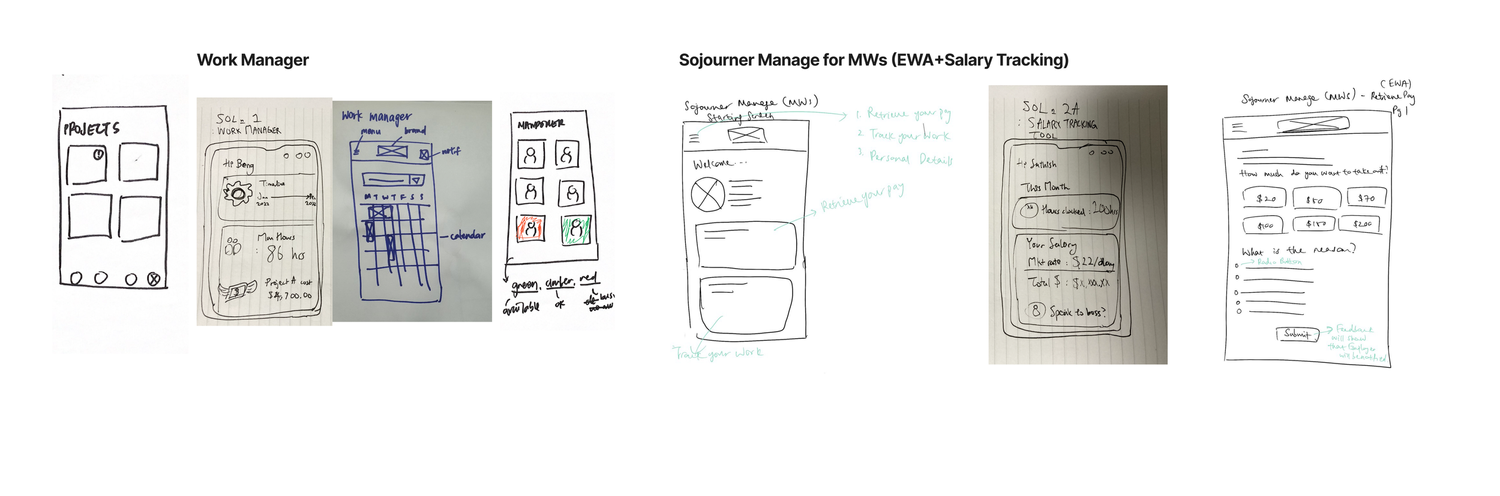
The design studio records collaborative concept work and wireframes, rather than a final delivery claim.
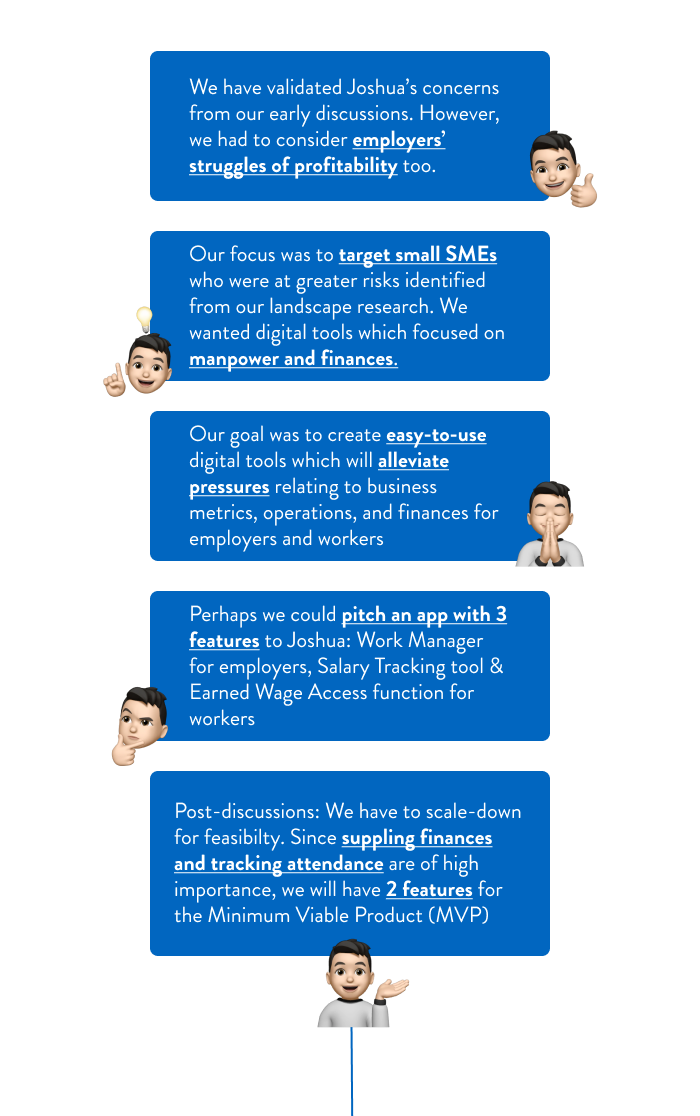
Ideation maps relationships among concepts before the team selected a feasible MVP scope.
ATTENDANCE
TESTED · DELIVERED MVP
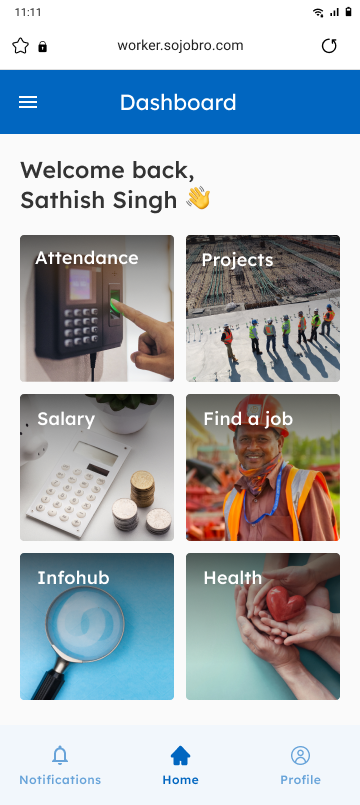
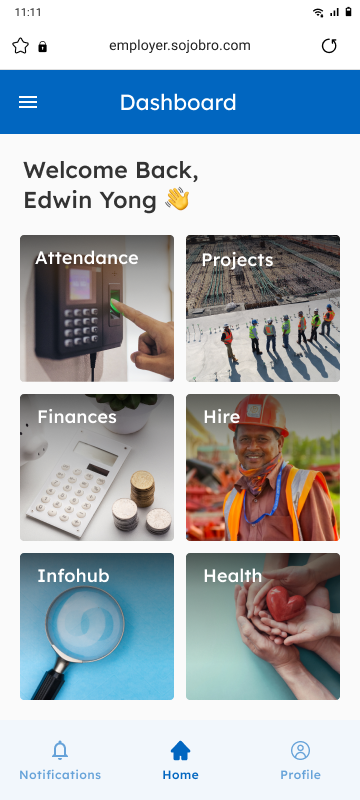
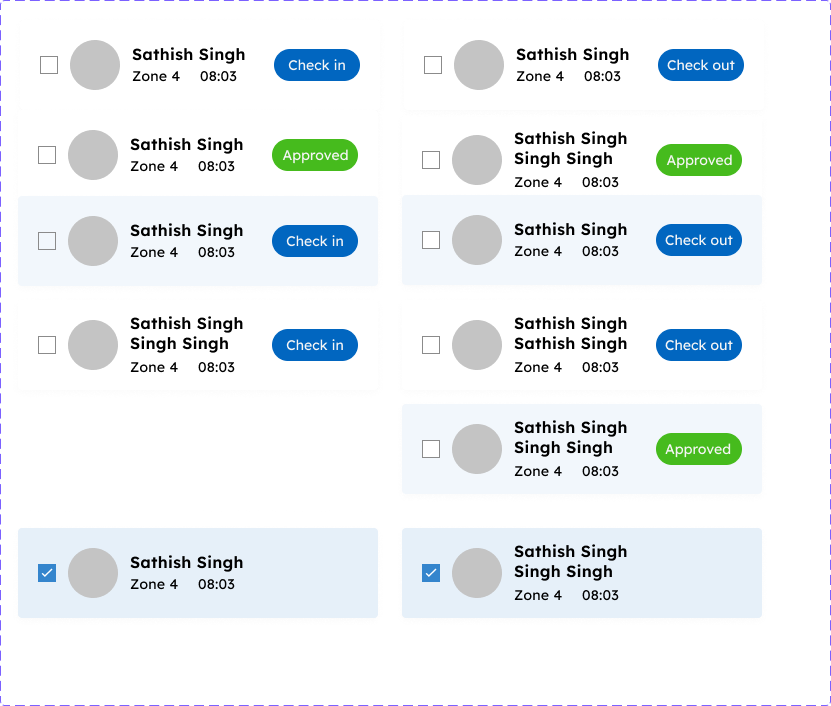
Worker mobile, employer mobile, and employer web were the delivered MVP’s connected surfaces.
EVIDENCE
Workers understood “sign in” more readily during testing.
DECISION
Rename “check in” to “sign in”.
EVIDENCE
The broader Work Manager carried more complexity than the MVP needed.
DECISION
Keep attendance tracking and remove the surrounding manager feature set.
WAGE ACCESS
TESTED · DELIVERED MVP
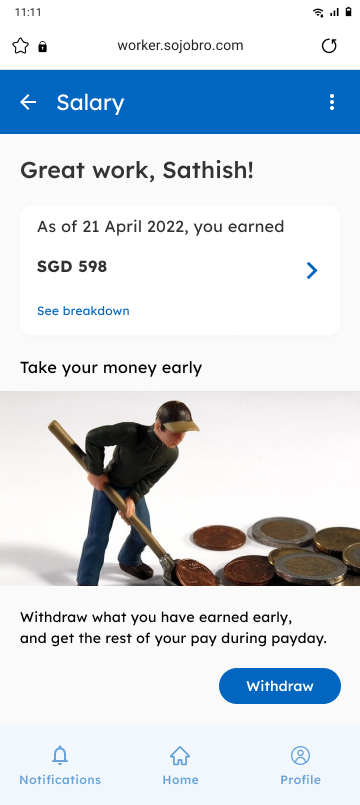
The team designed one earned-wage-access experience covering worker withdrawal requests and employer approval, then delivered the tested MVP to the client.
EVIDENCE
Workers clicked their earned-wage amount instead of the withdrawal button during testing.
DECISION
Add a stepper that makes the sequence visible.
EVIDENCE
The service needed a boundary around repeat withdrawals.
DECISION
Add monthly withdrawal limits to the delivered MVP flow.
OUTCOME
The client described the solution as easy to use for its target users and praised the team as adaptable and proactive.
He specifically valued that the team reduced an initially complex proposition to focus on users’ needs.
This is client feedback, not independently measured impact. Post-handover production use is not independently verified.
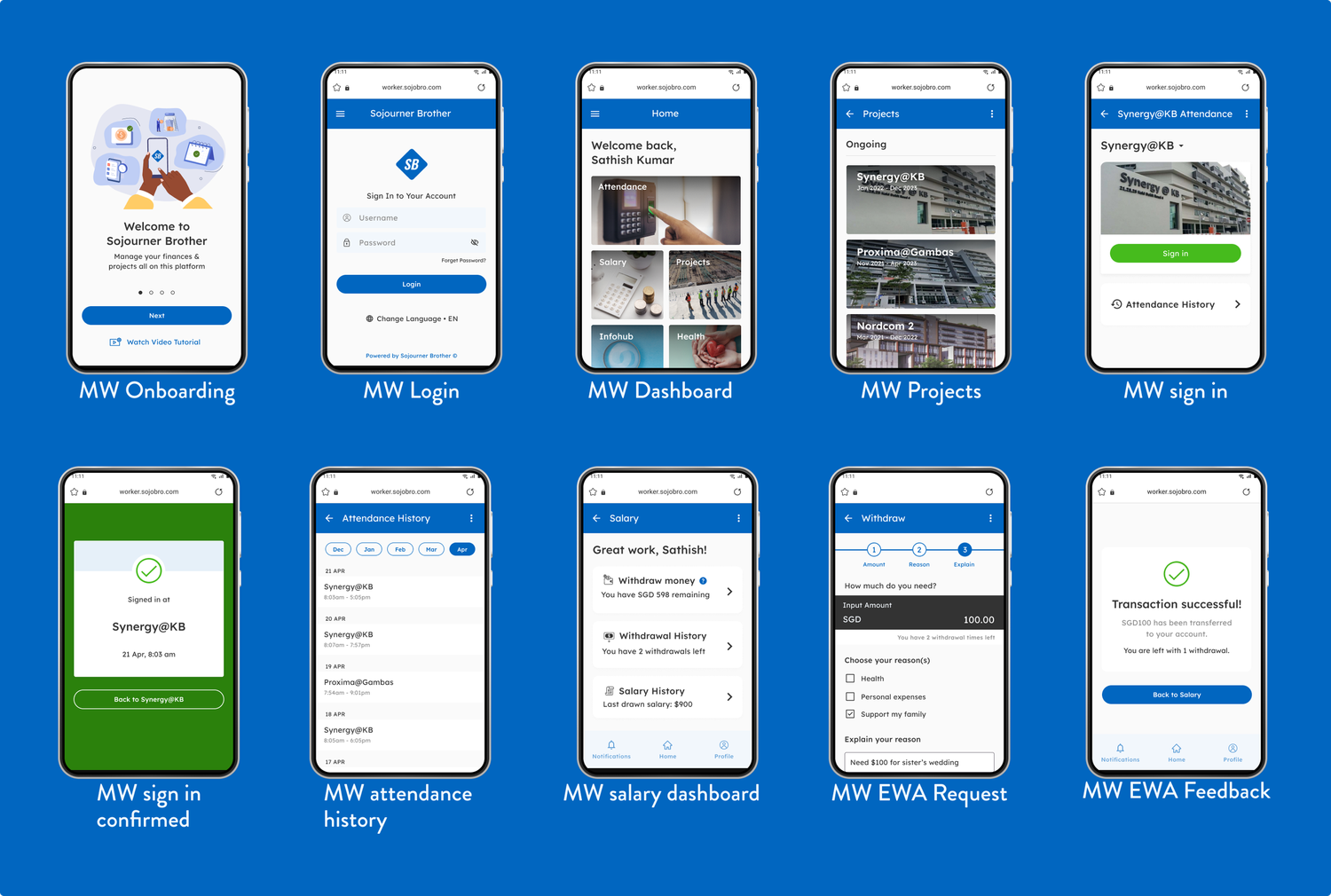
The final feature flow shows the worker journey across the delivered MVP surfaces.
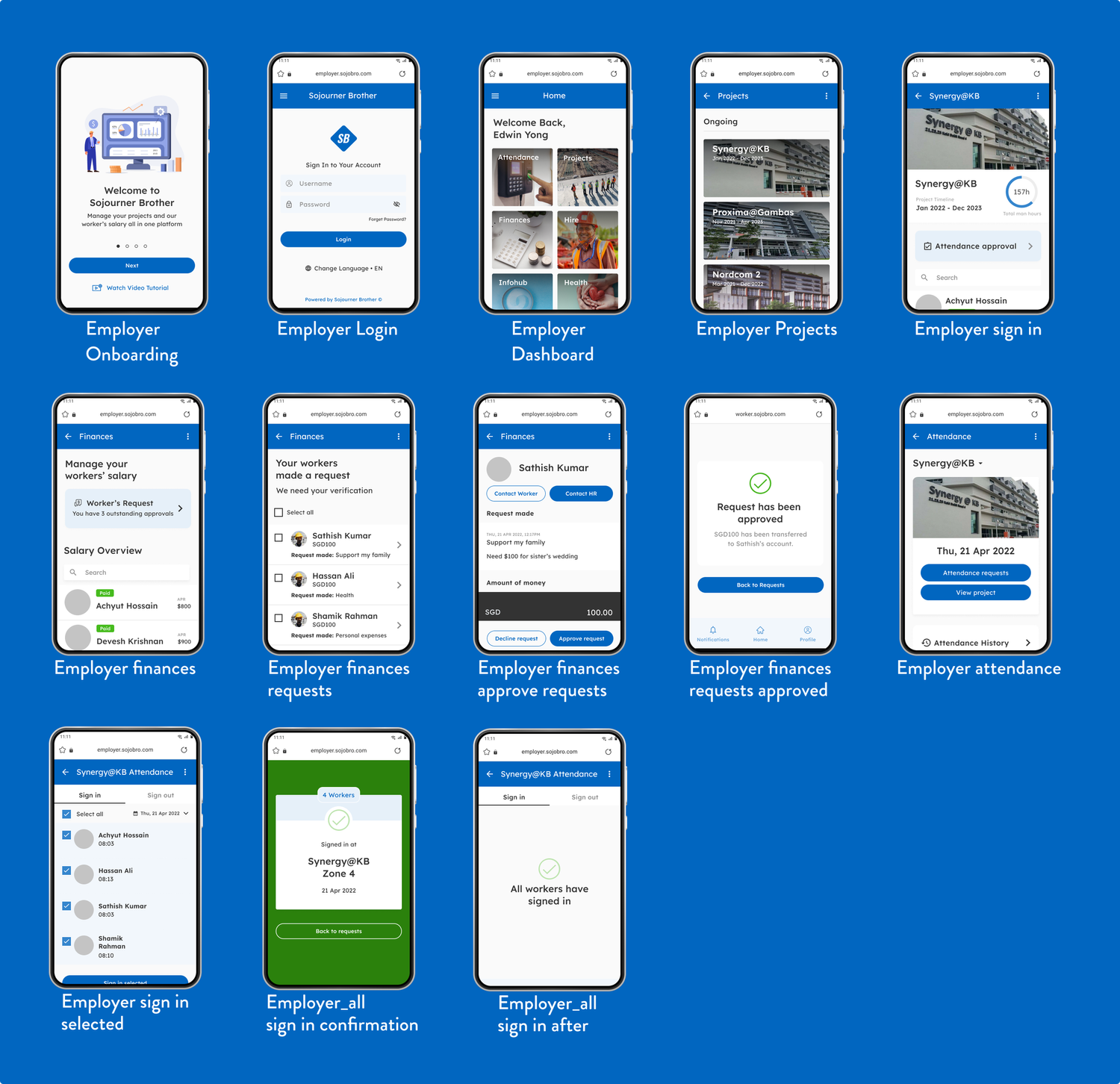
The employer screens show the companion operational surface for the delivered MVP.

The migrant-worker flow shows the sequence across the final mobile feature screens.
TESTED · DELIVERED MVP
Worker and employer experiences delivered to the client; post-handover production use is not independently verified.
TESTED · DELIVERED MVP
Worker request and employer approval experiences delivered to the client; post-handover production use is not independently verified.
SCOPED OUT
Removed during client scoping.
TESTED · DELIVERED MVP
Delivered as one of the MVP capabilities; post-handover production use is not independently verified.
PROPOSED
Post-MVP enhancement.