05 — WELLNESS ZONE · SEP 2022 – NOV 2024 · HEALTH & WELLNESS · B2B2C
Zero to 70% adoption — designing a corporate wellness suite that employees actually use
Role
Lead Product Designer
Team
2 squads across 2 timeframes — Product, Engineering
Timeline
Sep 2022 – Nov 2024
Care, partnered with Raffles Medical Group, was entering the corporate wellness market with no product and no partner base. I led design across the employee-facing Wellness Zone app and the corporate HR admin dashboard — from the research that confirmed the B2B2C model, to the pitch prototypes that signed the first corporate partner, to the launch that reached 70% adoption across 3,000 employees within 7 months.
WHAT I DID
Led product design across two squads over two timeframes (2022–2024) — designing the employee-facing Wellness Zone app and the corporate HR admin dashboard in parallel.
Ran UX research with Corporate HR teams and employees from existing Care partners — interview-based sessions synthesised into affinity maps that shaped the product's core engagement mechanic and confirmed the B2B2C model.
Redesigned the information architecture in Q2–Q3 2023 — restructured the sitemap to integrate Wellness Zone alongside existing verticals (medical records, marketplace) without disrupting the established user model.
Designed the gamification framework from first principles: a dual-loop points system where employees earn through wellness activities and redeem through corporate perks, referenced against Richard Yang's Dual Loops research.
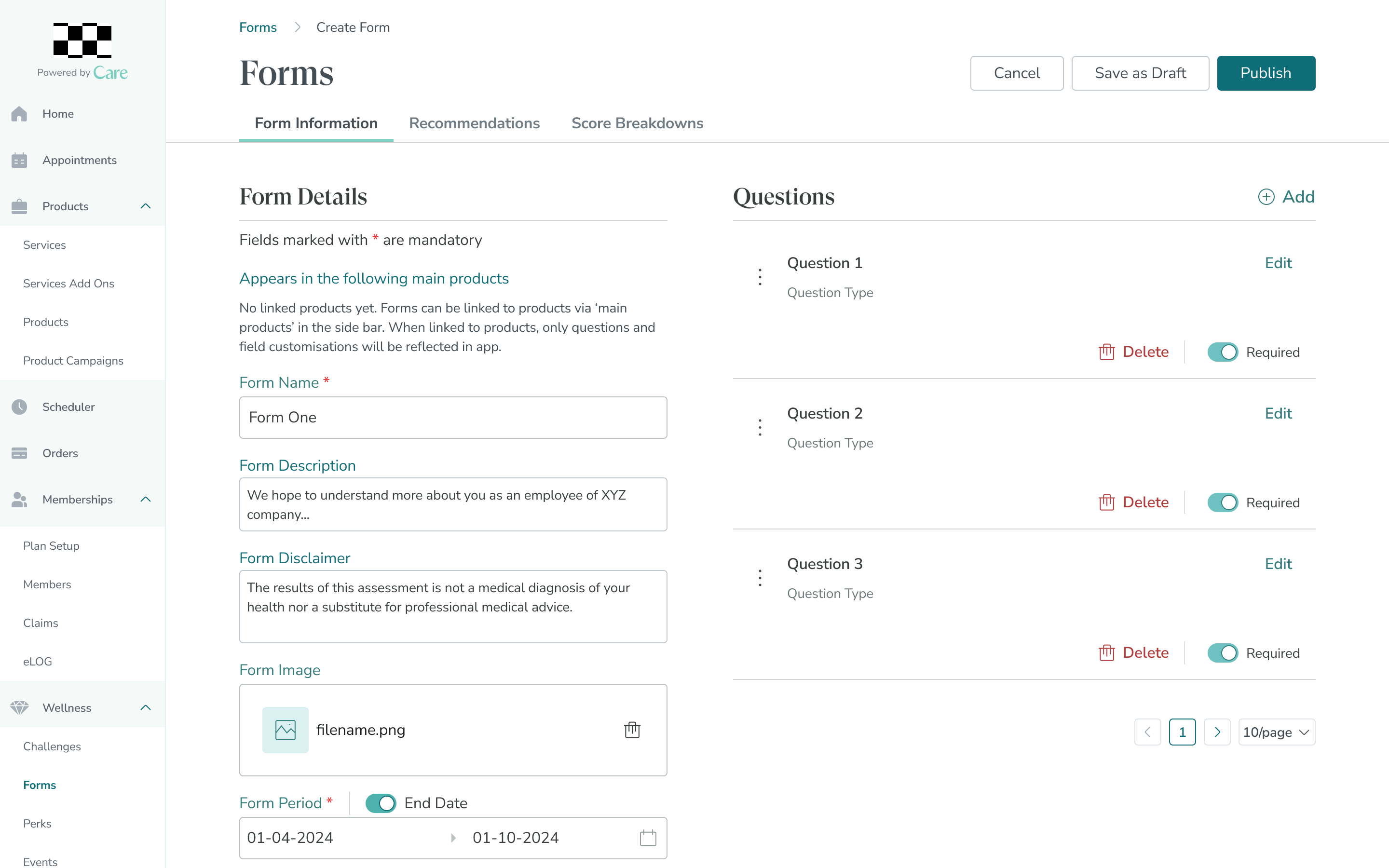
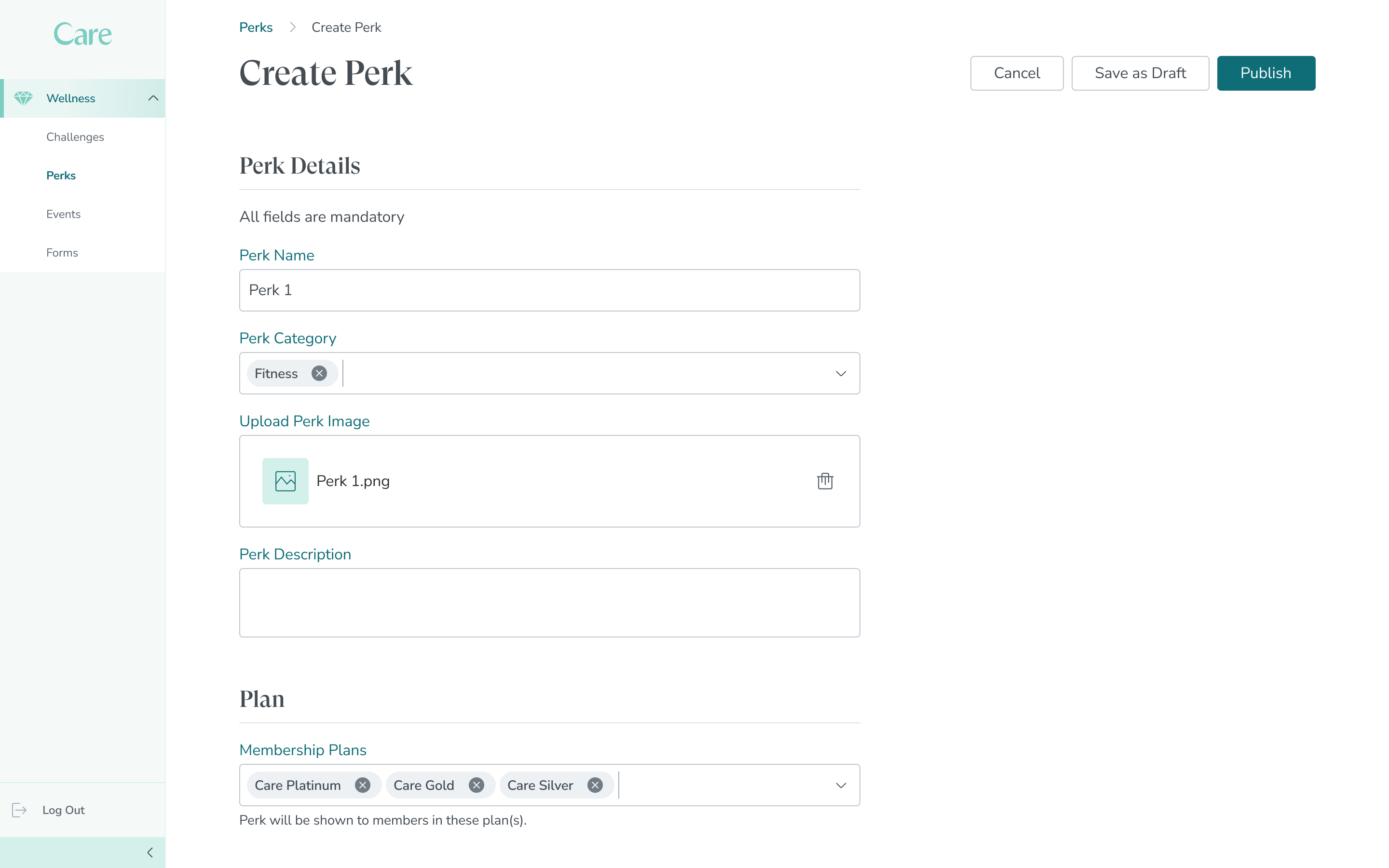
Built and iterated the Form Builder and Perk Builder interfaces for Corporate HR admins — self-serve tools that let partners create and publish wellness programs without engineering support.
Facilitated co-creation sessions with C-suite, corporate sales, and partner teams to develop pitch prototypes — including the session that signed the first corporate partner in August 2023.
Designed onboarding tooltips for the April 2024 launch — the guided activation layer that drove 70% adoption across 3,000 employees within 7 months.
THE CHALLENGE
Build a corporate wellness platform from zero — validate the business model, sign the first partner, and ship a product employees would actually engage with.
01
Winning the B2B2C conviction debate
The early strategic question was whether to go B2C (consumer wellness app) or B2B2C (corporate-employer-employee). UX research with existing partners confirmed the B2B2C model — employers were the activation layer for employee adoption, not individual motivation.
02
Partnership acquisition from zero
The platform had no existing user base when we needed to sign the first corporate partner. Prototypes had to be convincing enough to sell a future state — not just demonstrate a current product.
03
IA complexity across two user types
The Wellness Zone had to integrate cleanly into the existing Care app alongside medical records and marketplace — without creating a confusing experience for employees who were already using those features.
UX RESEARCH — JAN 2023
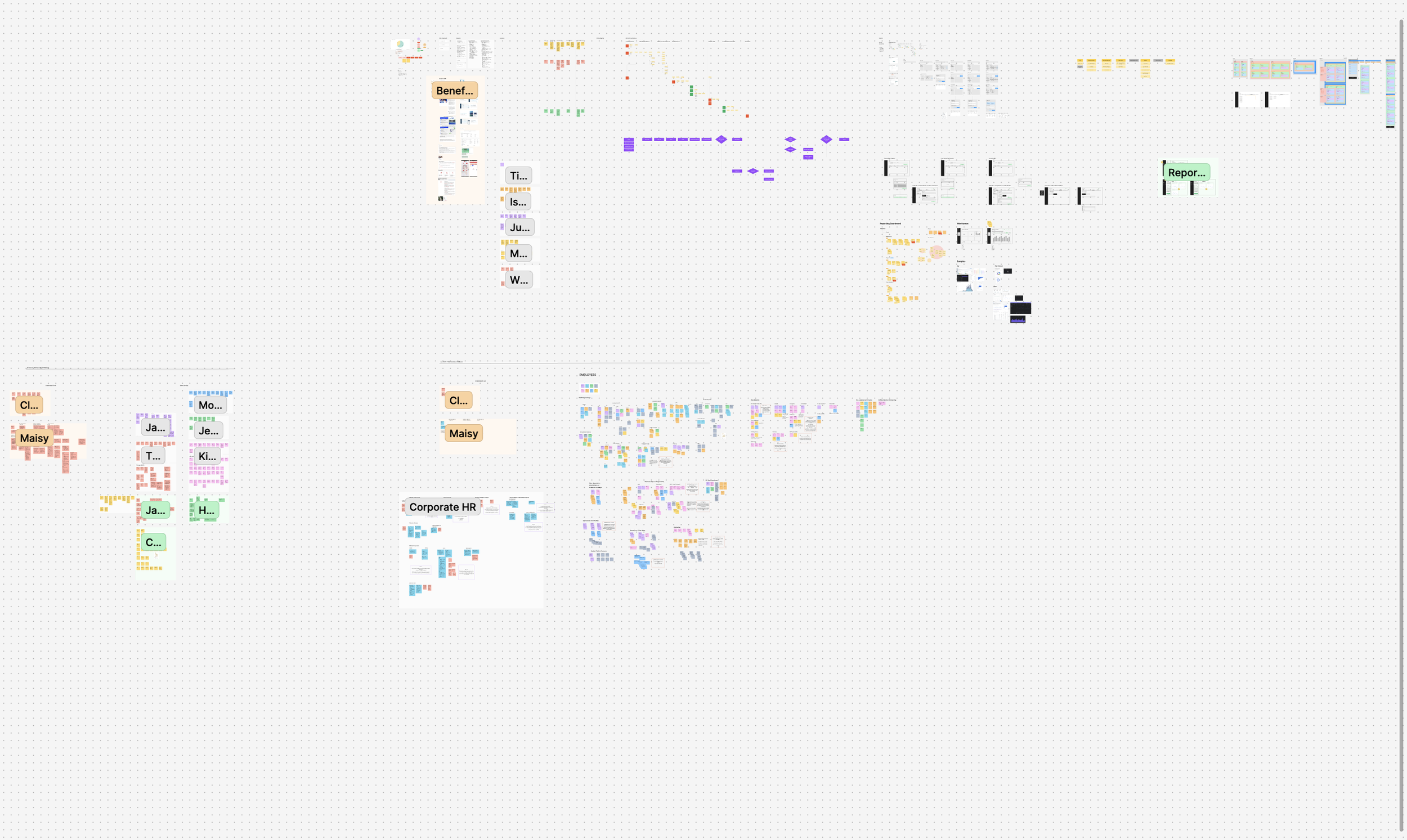
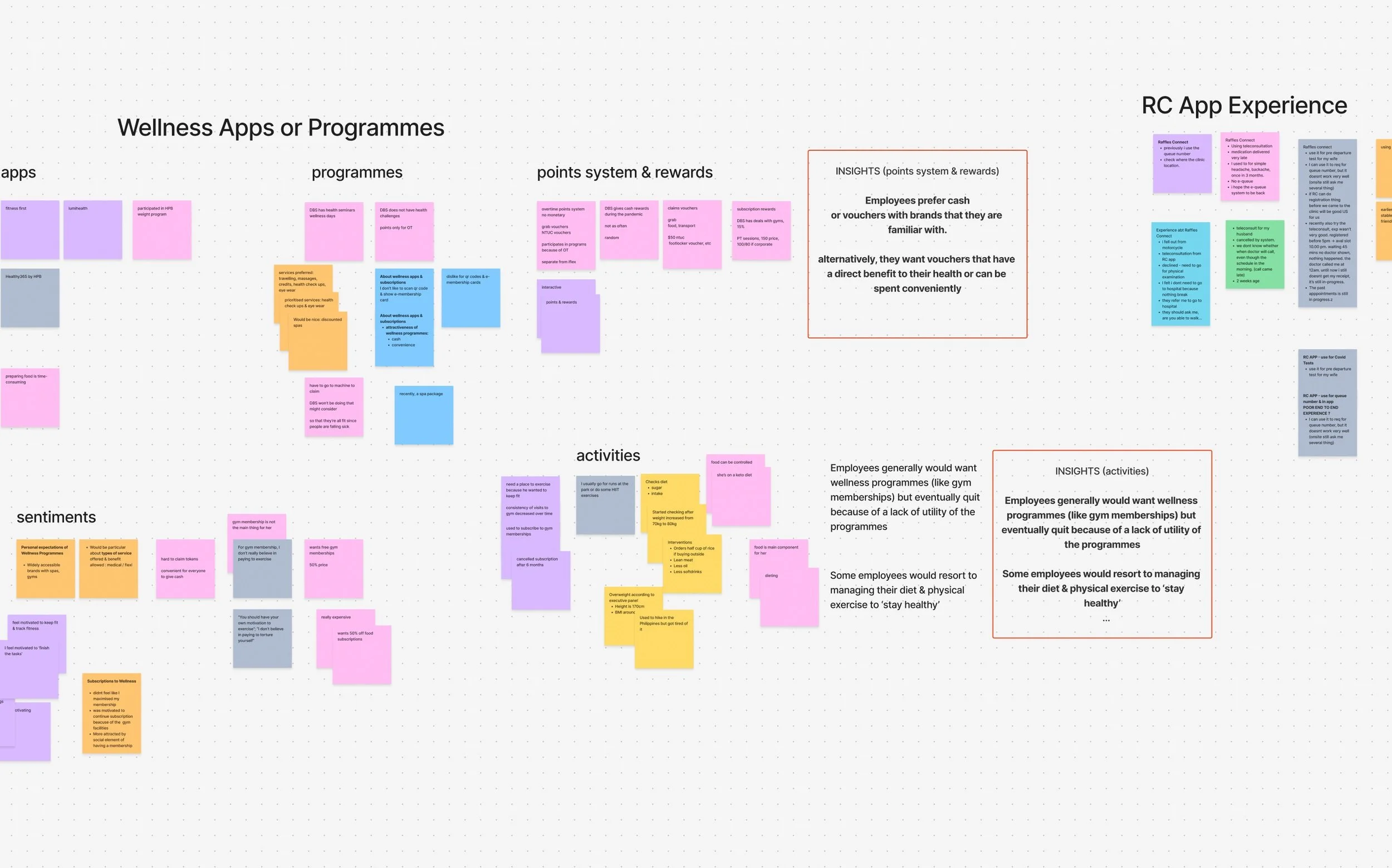
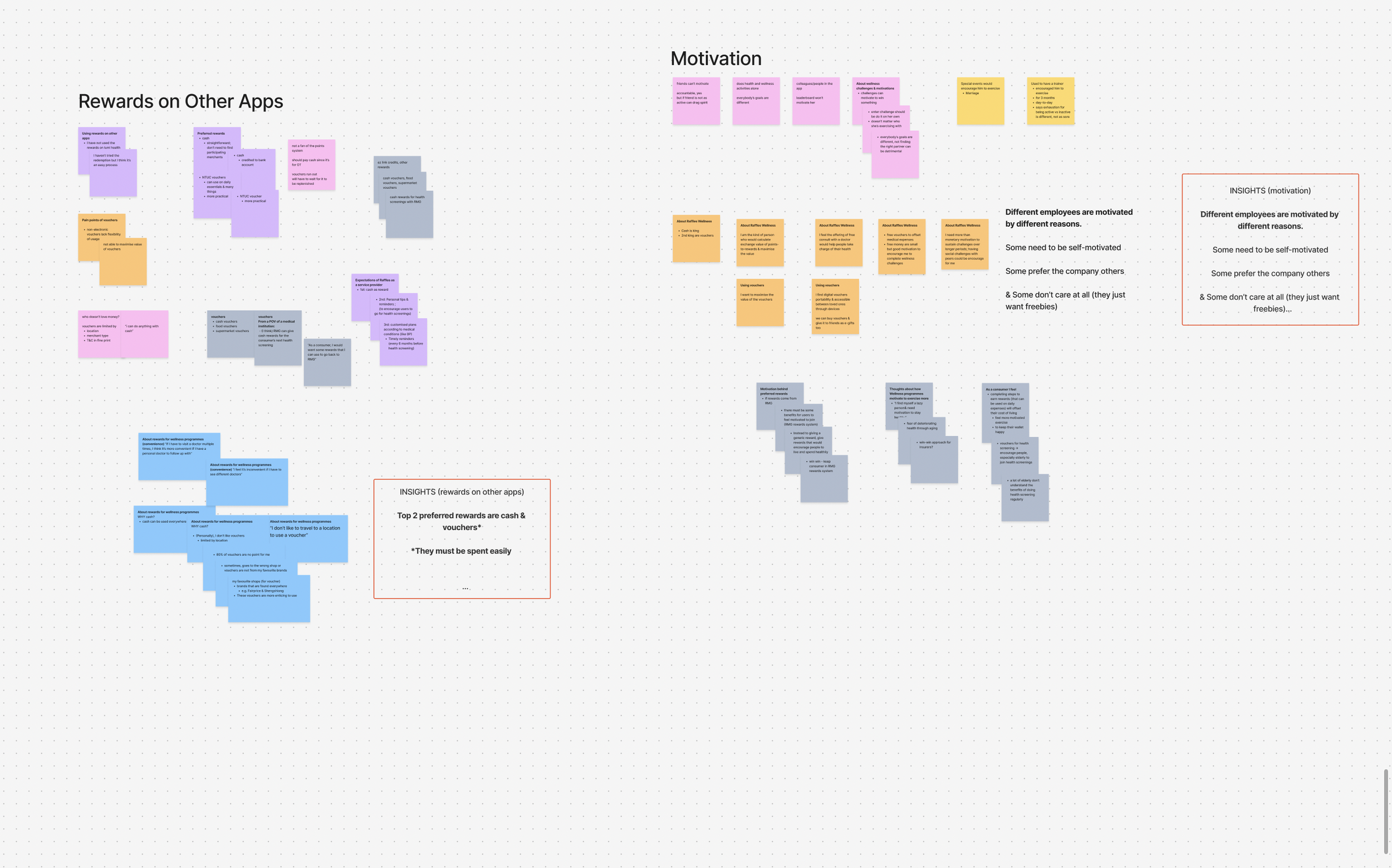
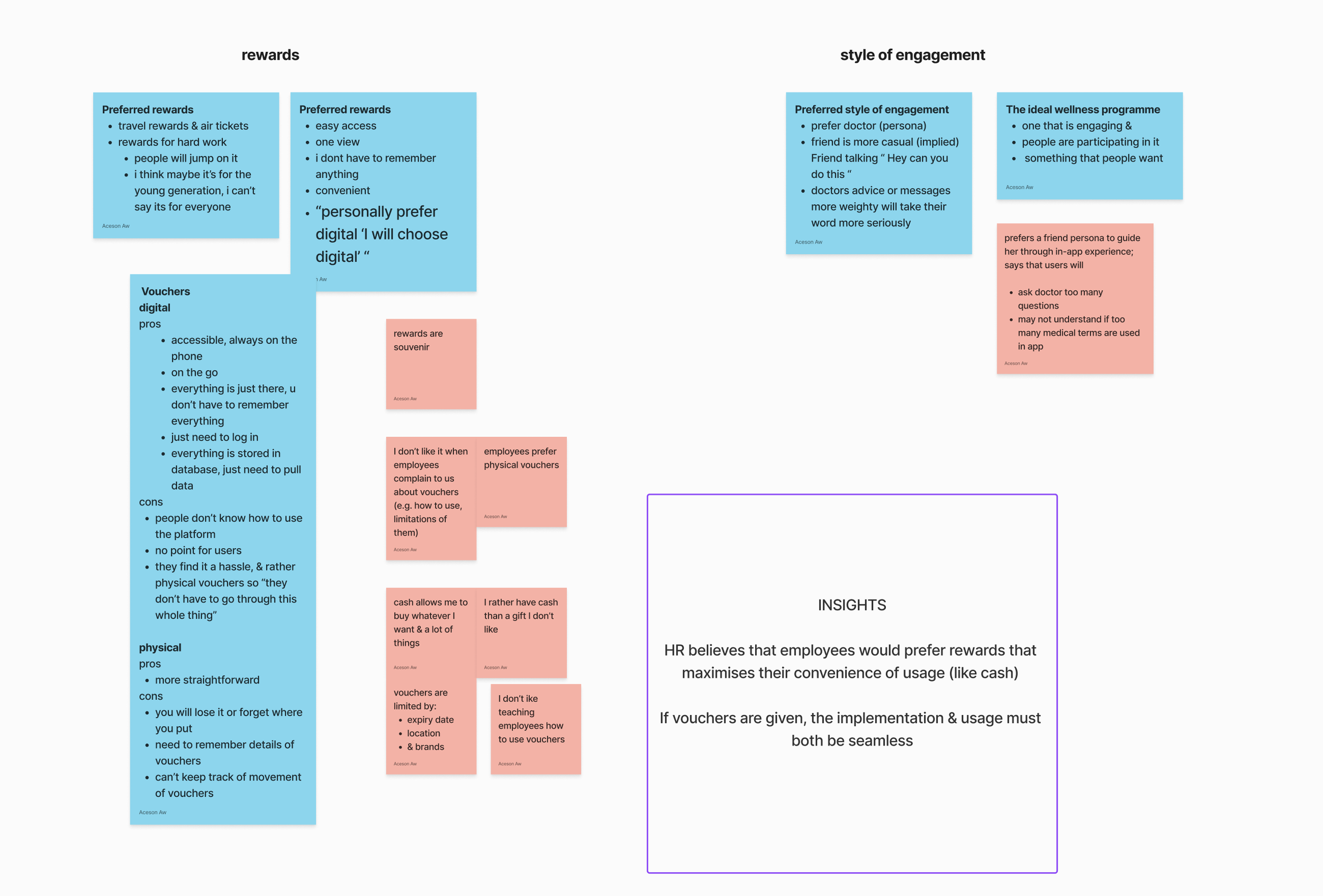
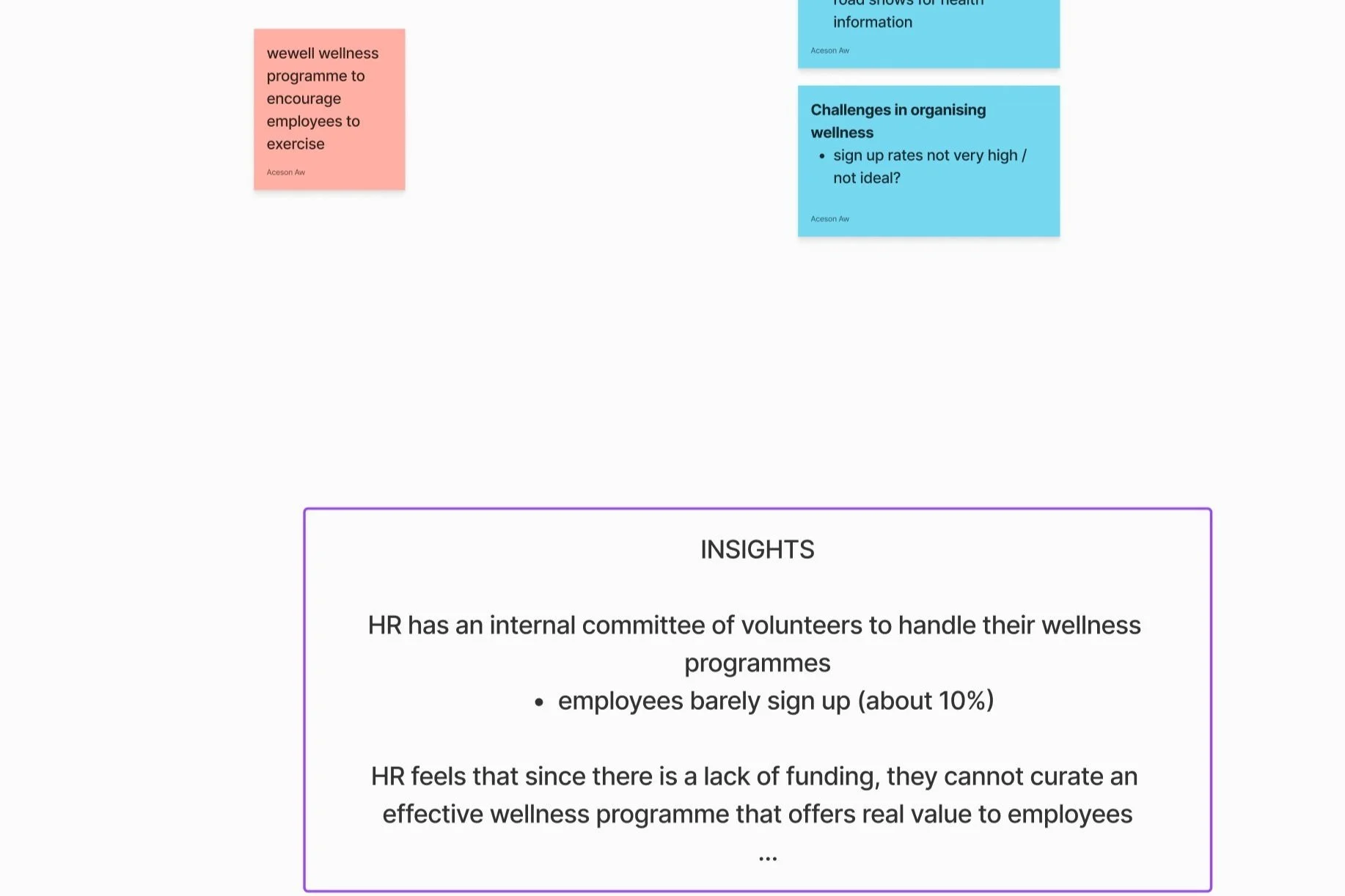
Multiple rounds of user interviews were conducted across Corporate HR teams and employees from existing Care partners. I was directly involved in 2 of these sessions — synthesising findings into affinity maps that shaped the core product model. The research confirmed the B2B2C conviction: employer-driven adoption and financial incentives consistently outperformed individual motivation as the primary engagement mechanism.
KEY RESEARCH FINDINGS
Financial incentives are the activation layer
Employees engaged consistently when wellness activity translated to tangible rewards — points, discounts, or cash equivalents. Social motivation alone was not sufficient for sustained participation.
Corporate structure drives adoption
The employer relationship was the strongest predictor of employee engagement. Company-wide challenges and HR-driven programs outperformed individually promoted wellness content. B2B2C was the right model.
Points clarity was a trust signal
Users consistently flagged confusion about how points were earned and spent. A clear points wallet with earn/redeem/expire history was not a nice-to-have — it was the prerequisite for any gamification mechanic to work.
STAKEHOLDER ALIGNMENT — JUL 2023
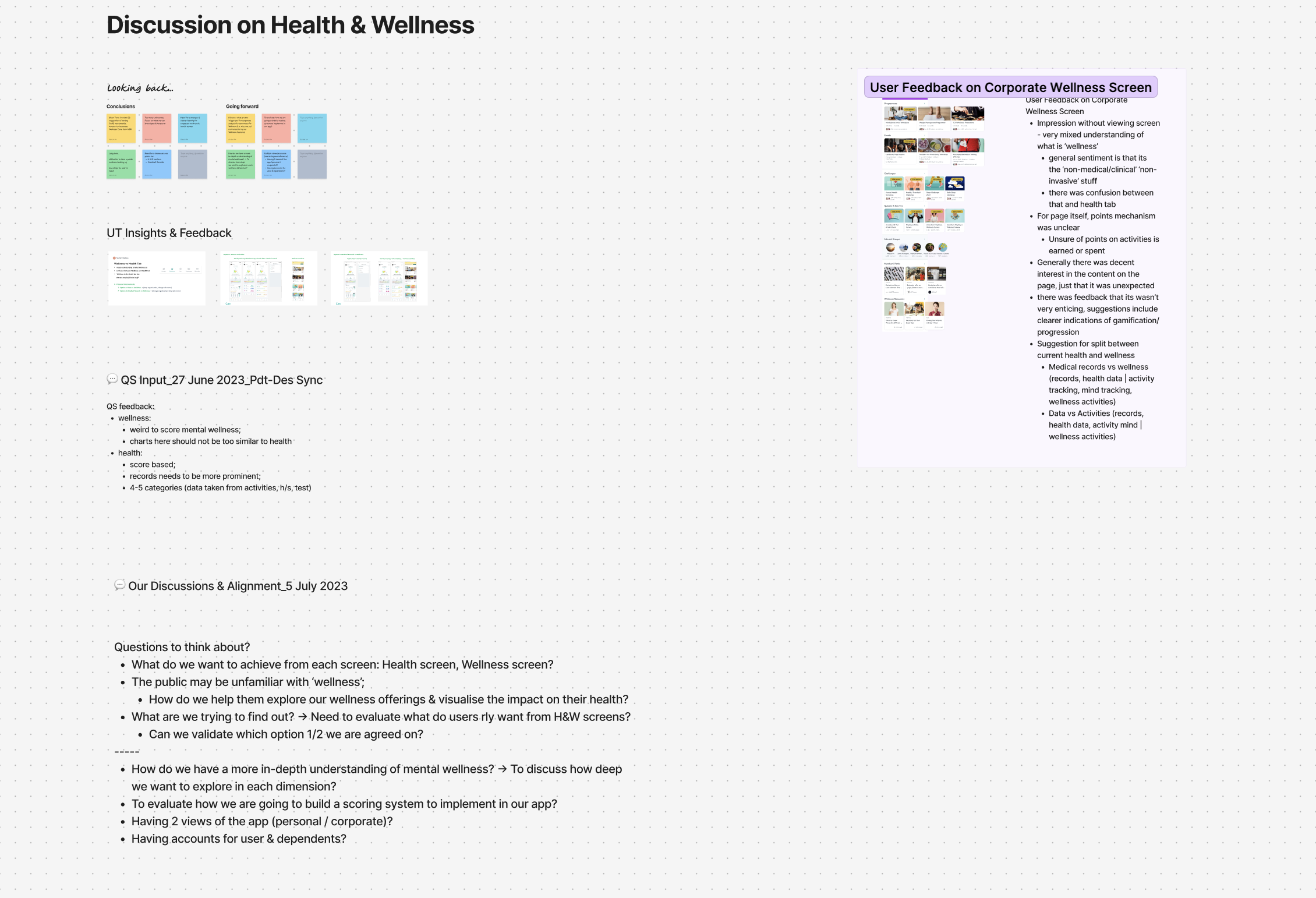
As user testing surfaced conflicting signals — wellness vs. health, personal vs. corporate views, scoring systems vs. activity-based engagement — I facilitated alignment workshops with Product, Design, and QS to resolve the open questions before they became scope debt. The outputs directly shaped the IA decisions that followed.
SYSTEMS THINKING — INFORMATION ARCHITECTURE
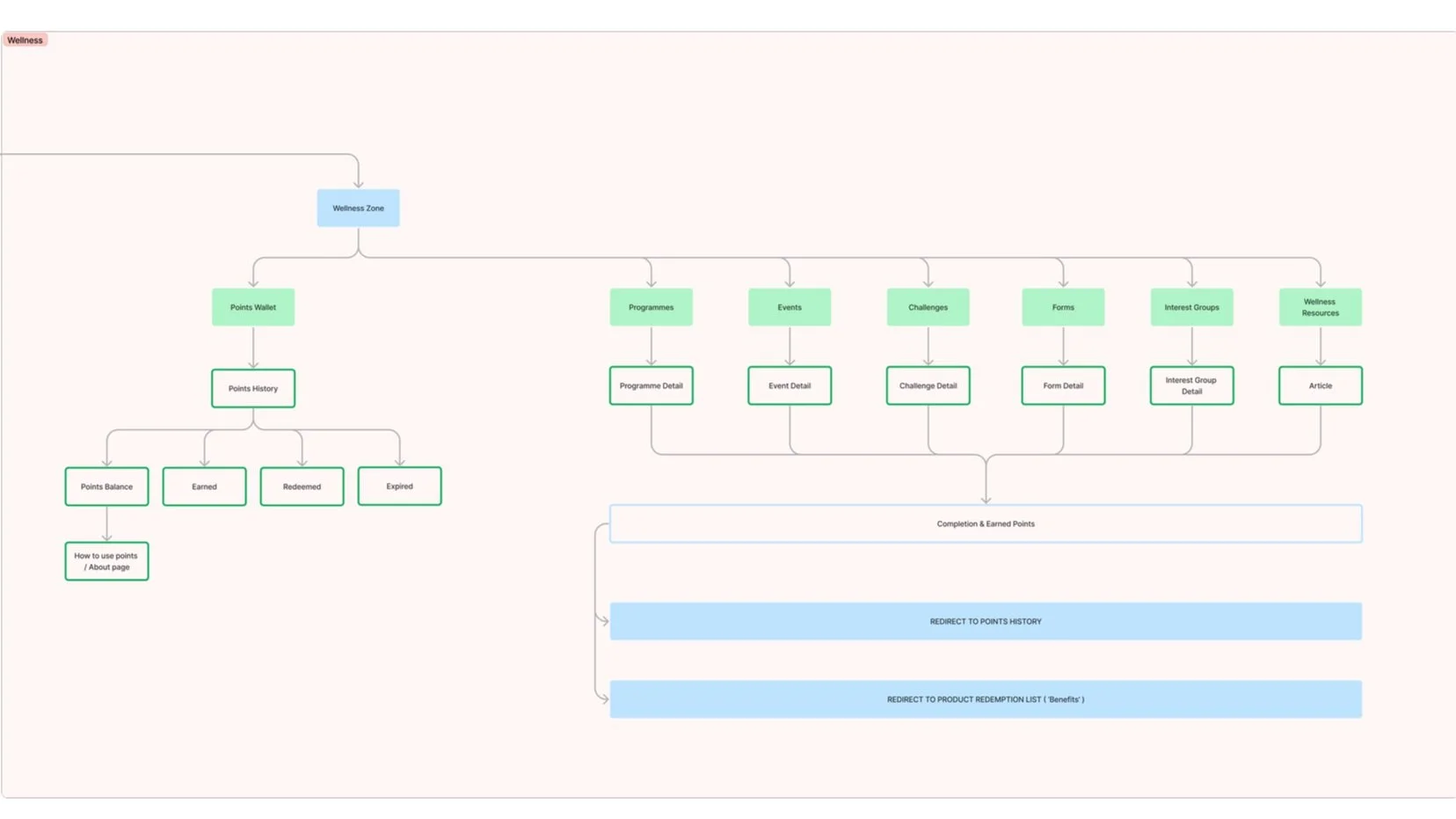
The Wellness Zone could not exist as a standalone product — it had to integrate into the existing Care app alongside medical records and the marketplace. I redesigned the sitemap in Q3 2023 to give Wellness Zone a coherent sub-architecture (Points Wallet, Programmes, Events, Challenges, Forms, Interest Groups, Wellness Resources) while preserving the top-level user model that existing users already understood.
PROTOTYPING — PITCHING BEFORE SHIPPING
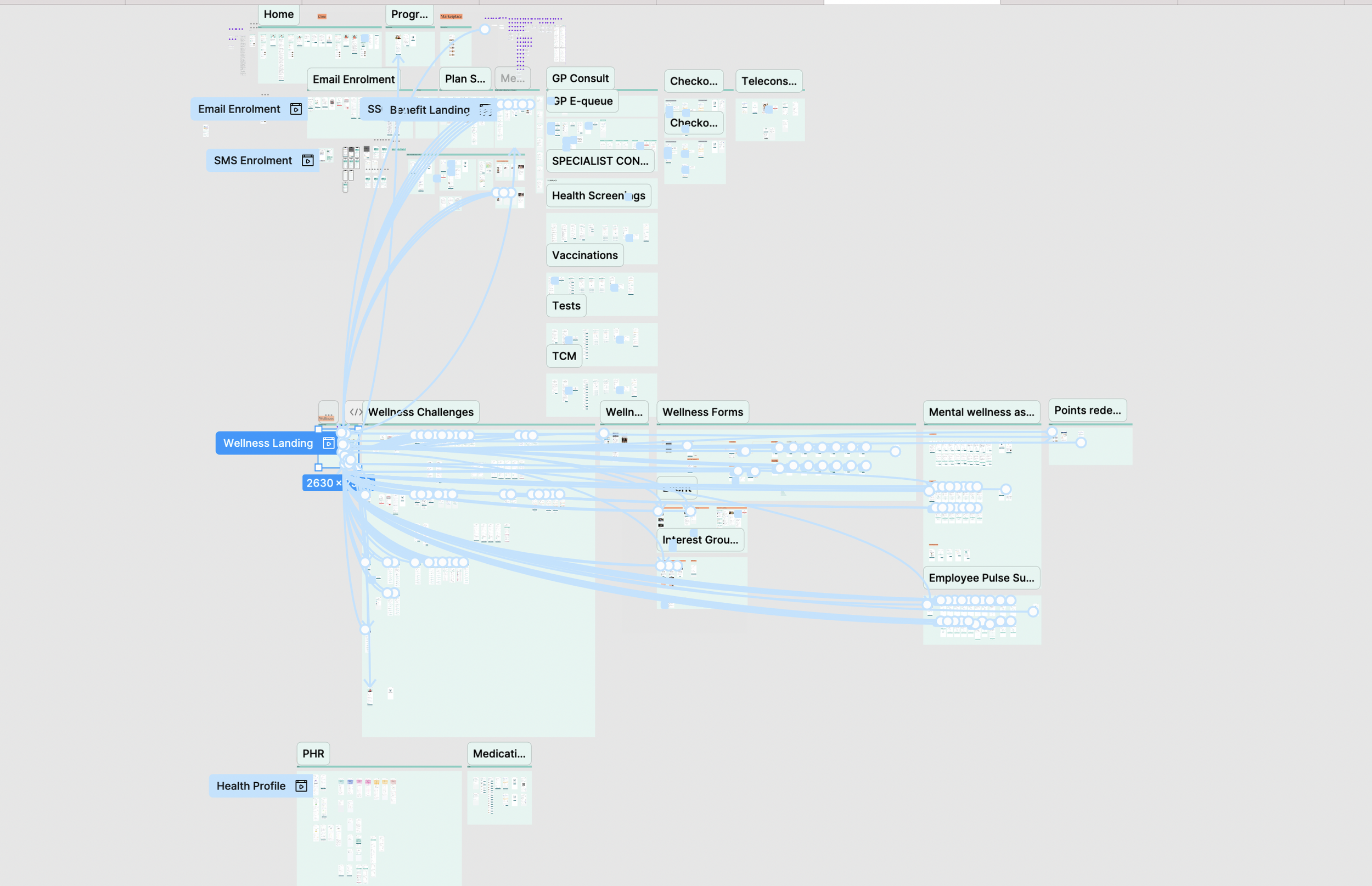
I facilitated co-creation sessions with C-suite, corporate sales, and partner teams to build pitch prototypes that had to sell a future-state product. The Figma prototype map below covers the full Wellness Landing flow — including enrolment paths, all wellness features, health profile, and points redemption — built before a single line of production code was written. The first corporate partner was signed from this prototype in August 2023.
THE PRODUCT — WELLNESS ZONE APP
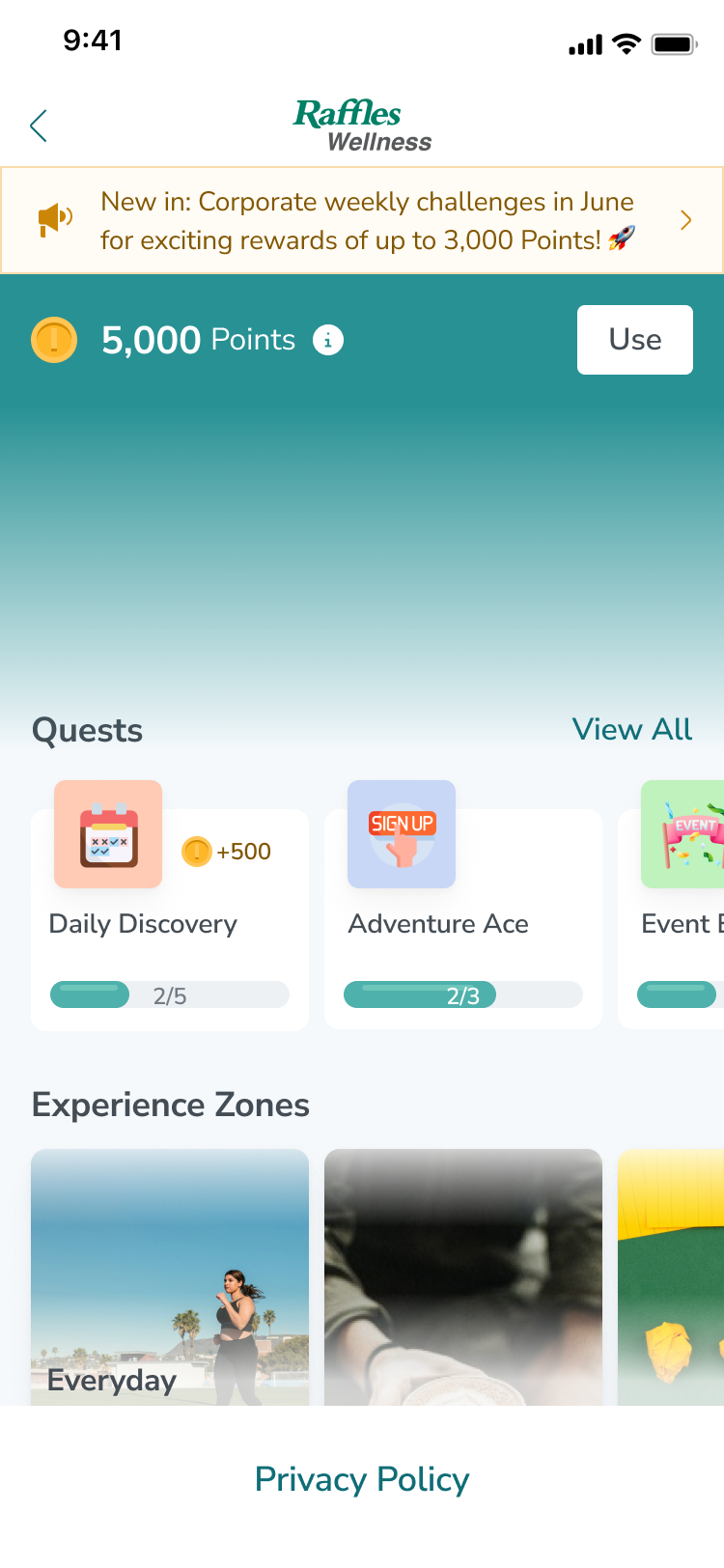
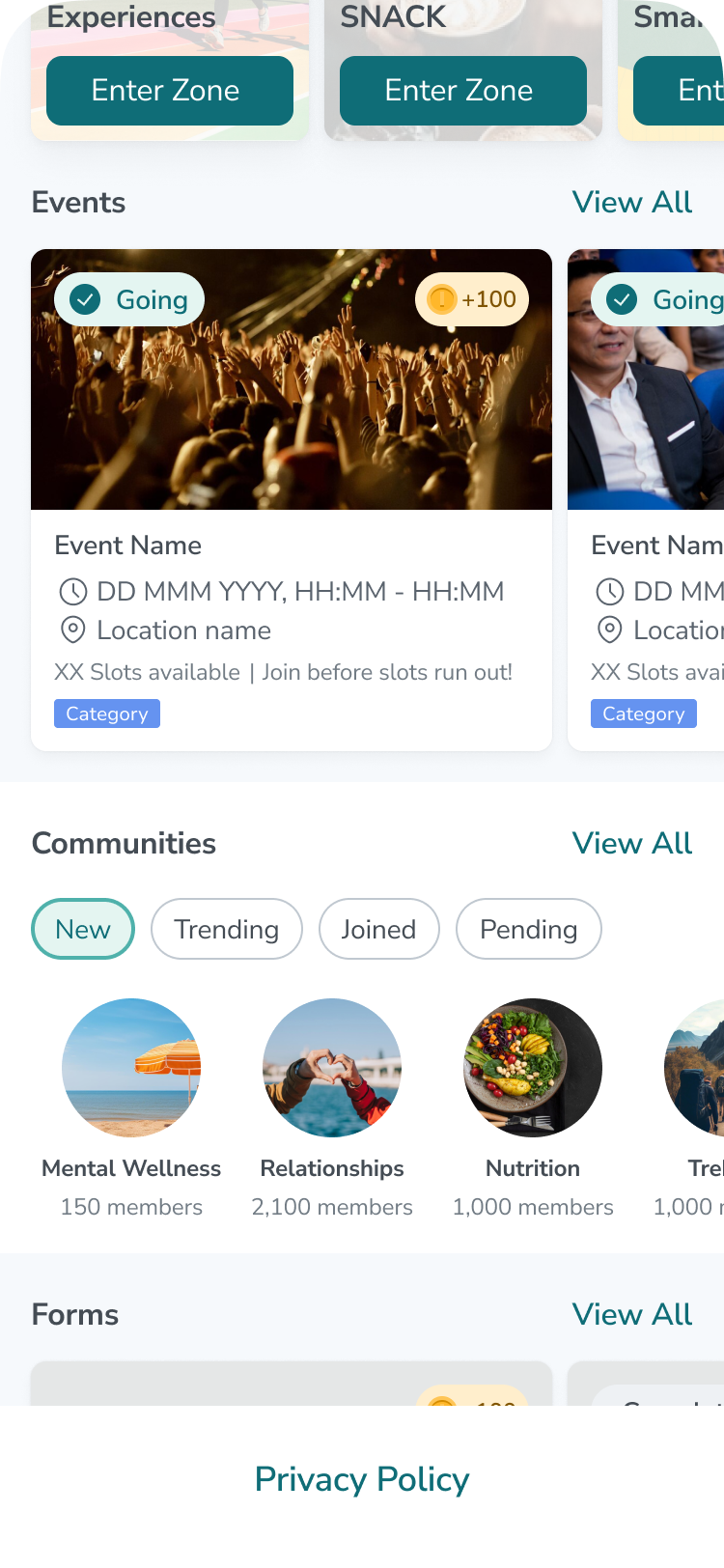
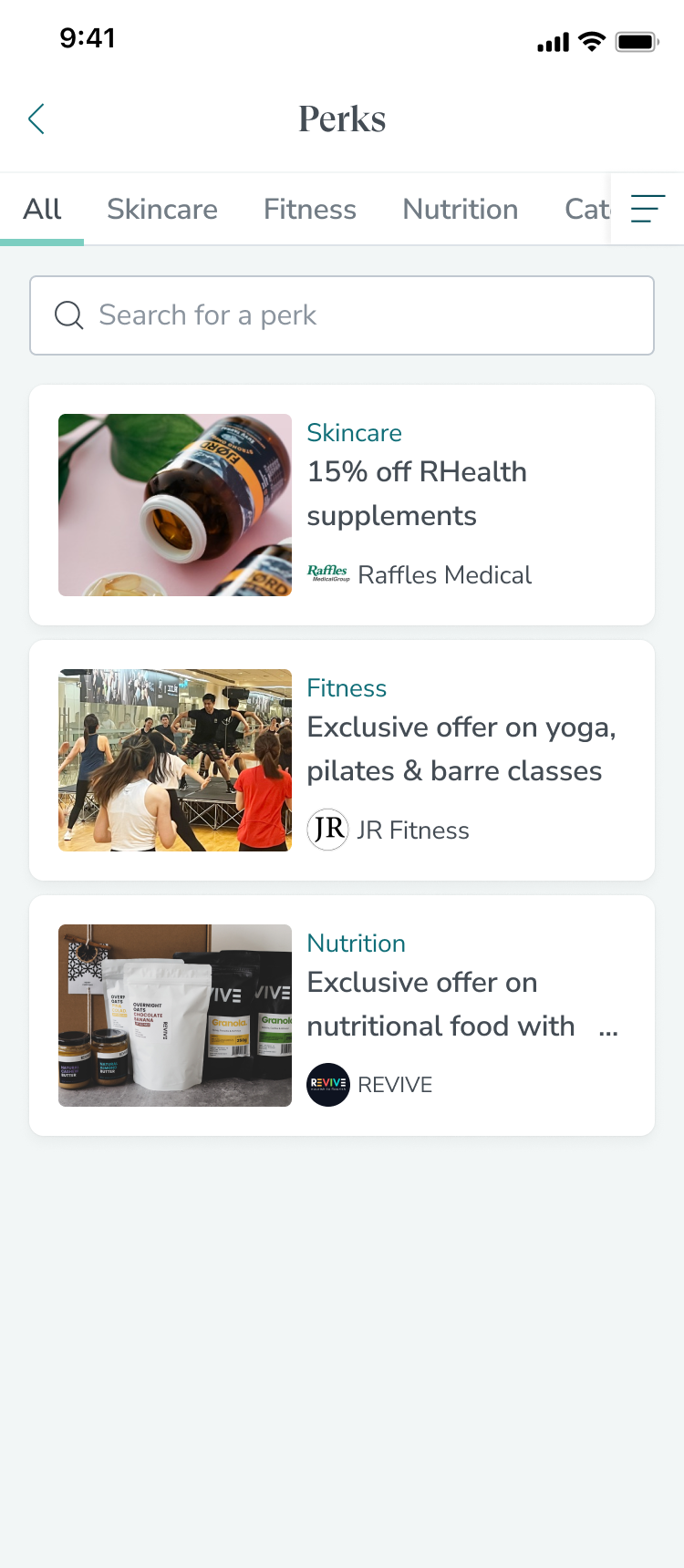
The employee-facing app: personalised wellness challenges, a dual-loop points system (earn through activities, redeem through corporate perks), events and communities, wellness forms, and health content. Onboarding tooltips designed for the April 2024 launch drove the initial adoption spike.
THE PRODUCT — CORPORATE HR ADMIN DASHBOARD
The partner-facing admin layer: Form Builder and Perk Builder interfaces that let Corporate HR teams create and publish wellness programs without engineering support. Self-serve tooling was the unlock for scalable partner onboarding — each new corporate client could configure their own wellness suite independently.
OUTCOMES
employee adoption during the 7-month POC validation period across 3,000 employees (Apr–Nov 2024)
sustained monthly active usage on the Wellness Zone post-launch
August 2023 — from a prototype pitch, before any production code existed